Digestive Support for Dogs and Cats: A Practical Guide to Gut Health
Digestive Support for Dogs and Cats: A Practical Guide to Gut Health
Effective digestive support for dogs and cats involves more than addressing occasional stomach upset. The gastrointestinal tract is a coordinated system that digests food, absorbs nutrients, regulates fluid balance, supports a protective intestinal barrier, and plays a major role in immune function.
When any part of this system is under strain, digestive concerns may involve the stomach, intestines, pancreas, liver, gallbladder, gut microbiota, or immune response. A complete approach to digestive support for dogs and cats considers diet quality, water intake, digestion, intestinal motility, the gut lining, and microbial balance.
Why digestive health matters for dogs and cats
The gastrointestinal tract includes the mouth, stomach, small intestine, large intestine, colon, liver, gallbladder, and pancreas. It is also influenced by the autonomic nervous system, which helps control digestive activity.
These parts work together to break food into smaller molecules that can be absorbed and used throughout the body. The digestive tract also produces enzymes, gastric secretions, bile, mucus, and hormones that help regulate digestion, appetite, glucose balance, and movement through the intestines.
Digestive support for dogs and cats should therefore focus on several connected functions:
- Digestion: Breaking down proteins, carbohydrates, and fats.
- Nutrient absorption: Moving usable nutrients from food into the body.
- Secretory function: Producing enzymes, bile, mucus, and other digestive substances.
- Motility: Maintaining normal movement of material through the digestive tract.
- Mucosal barrier protection: Supporting the intestinal lining.
- Microbiome balance: Maintaining diverse, beneficial microbial communities.
- Immune function: Distinguishing harmless substances, such as food, from potential threats.
The gut barrier and immune system connection
The intestinal lining is not simply a surface that absorbs nutrients. It is also a protective barrier. Mucosal folds, villi, and microvilli expand the surface area available for nutrient absorption. This lining is constantly renewed, making healthy intestinal tissue essential for normal digestive function.
The gastrointestinal tract is routinely exposed to food particles, resident microorganisms, bacteria, fungi, viruses, and other foreign materials. Its immune system must respond appropriately by recognizing potential threats while tolerating safe dietary substances.
This is why digestive support for dogs and cats can have broader relevance than stool quality alone. The gut and immune system work closely together, and a disruption in one area can affect the other.
What is dysbiosis in dogs and cats?
Dysbiosis describes an imbalance in the gut microbiota. A healthy microbiota has diversity in both microbial species and function, along with resilience during normal physiological stress.
When microbial balance is disrupted, there may be fewer beneficial microbes, reduced species diversity, and greater opportunity for less desirable organisms to expand. Altered microbial ecosystems have been associated with metabolic and immune changes in animals.
Chronic gastrointestinal concerns, including inflammatory bowel disease and colitis, are associated with changes in the microbiome. This makes microbiome support an important consideration when developing a digestive support plan for dogs and cats.
How dysbiosis may affect the intestinal barrier
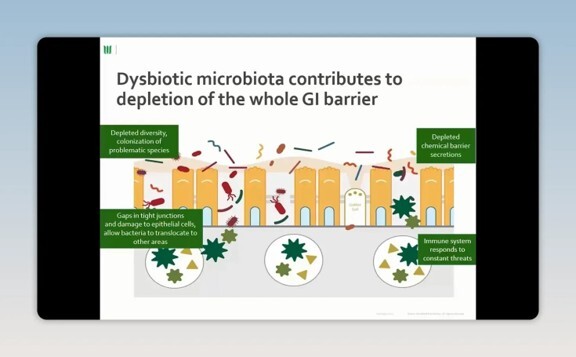
A disrupted microbiota may contribute to depletion of the gut’s protective barrier. This can involve weakened chemical secretions, damage to epithelial cells, and altered tight junctions between intestinal cells.
The term increased intestinal permeability is sometimes used to describe a barrier that is not functioning as effectively as it should. In this situation, gaps between intestinal cells may allow bacterial components to move toward tissues where they can contribute to immune activation.
Because digestive concerns can have multiple contributing factors, persistent or complex symptoms should be assessed with veterinary guidance rather than managed as a simple microbiome issue.
Core areas to consider for digestive support for dogs and cats
A useful digestive support strategy looks beyond one ingredient or one symptom. Consider the following areas together.
1. Diet and water quality
Food and water are direct inputs into the digestive system. Diet quality, food tolerance, and consistent access to suitable water are foundational considerations. Changes in food, treats, and other ingested items can also affect the gastrointestinal environment.
2. Intestinal mucosal integrity
The gut lining needs ongoing support because it is responsible for nutrient absorption and barrier protection. Healthy villi and enterocytes, the cells lining the intestine, are central to these tasks.
3. Microbiota quality and diversity
Microbiome support aims to encourage a diverse and resilient ecosystem. This may involve consideration of probiotics, prebiotics, and postbiotics, depending on the animal’s needs and the guidance of a veterinary professional.
4. Digestive secretions and enzymes
Normal digestion depends on salivary, gastric, biliary, and pancreatic secretions. Digestive enzymes help break down food, while bile supports digestion and absorption of fats in the small intestine.
5. Intestinal motility
Motility refers to how material moves through the digestive tract. It is an important part of normal bowel function and should be considered alongside food digestion and absorption.
Probiotics, prebiotics, and postbiotics
These terms are often grouped together, but they serve different purposes in digestive support for dogs and cats.
Probiotics
Probiotics are beneficial live microorganisms. Research discussed in this area includes Enterococcus faecium, a commonly recognized probiotic species used in canine products. In one early canine study, this probiotic was associated with measures of immune activity, including changes in serum IgA and mature B cells.
Not every probiotic is interchangeable. Strain selection, formulation, and suitability for the individual animal all matter.
Prebiotics
Prebiotics are fibers that help nourish beneficial microorganisms already present in the digestive tract. They are often combined with probiotics to provide both beneficial microbes and the substrates that support them.
Postbiotics
Postbiotics are beneficial microbial metabolites or components. They may include enzymes, amino acids, peptides, organic acids, flavonoids, and short chain fatty acids.
Short chain fatty acids, including butyrate and acetate, are among the most studied postbiotic compounds. They are generated by gut microbes and help support intestinal epithelial integrity. Healthy dogs have been observed to have higher levels of short chain fatty acids than unhealthy dogs.
Nutrients and compounds used for digestive support
Different compounds may be considered for different aspects of digestive support for dogs and cats. Their role should match the animal’s overall needs rather than being selected solely because they are popular.
L glutamine
L glutamine is an amino acid and an important energy source for enterocytes. It supports intestinal villi and the intestinal lining, both of which are important for digestion and nutrient absorption. It is also associated with immune cell activity in the gut.
Bile salts
Bile salts support the liver and gallbladder and assist with fat digestion and absorption in the small intestine. They may also be relevant when considering healthy bowel function and motility.
Digestive and pancreatic enzymes
Digestive enzymes help break down proteins, carbohydrates, and fats. Pancreatic enzymes are part of this process and support the normal digestive work performed by the pancreas.
Some enzyme formulas also include betaine hydrochloride, which is used to support healthy stomach pH in addition to digestive and pancreatic enzyme activity.
Chlorophyll, alfalfa, and wheat germ oil
Alfalfa can provide chlorophyll, which has been used to support detoxification processes and fecal excretion through bile acids. Wheat germ oil is a source of vitamin E and has antioxidant properties associated with tissue support.
How to choose a digestive support plan
A practical plan for digestive support for dogs and cats starts by identifying the main area that needs attention. Rather than adding several products at once, use a clear purpose for each component.
- Review the full digestive picture. Consider food, water, stool changes, appetite, motility, and any history of liver, pancreatic, immune, or chronic intestinal concerns.
- Decide whether microbiome support is relevant. Probiotic, prebiotic, or postbiotic support may be worth discussing when microbial balance is a key concern.
- Consider the digestive process itself. Enzyme and bile support may be relevant when protein, carbohydrate, fat digestion, stomach pH, or pancreatic function need attention.
- Support the intestinal lining. Nutrients such as L glutamine may be considered for their role in enterocyte and villi support.
- Evaluate the response as a whole. Digestive health is connected to immune function, liver and gallbladder activity, and intestinal barrier integrity.
Common mistakes to avoid
- Focusing only on the stomach or stool. Digestive signs can involve the microbiome, gut barrier, enzymes, motility, or immune activity.
- Treating all probiotics as equivalent. Probiotic effects depend on the specific strain and formulation.
- Ignoring fat digestion. Biliary secretions and pancreatic enzymes are important for normal fat breakdown and absorption.
- Overlooking dietary inputs. Food, treats, and water quality are basic factors in digestive health.
- Using a single solution for complex concerns. Chronic gastrointestinal issues can involve multiple systems and require a more complete evaluation.
- Assuming supplements replace assessment. Nutrition can support digestive function, but it should complement appropriate veterinary care for ongoing or complicated issues.
Frequently asked questions
Can digestive health affect immune function in dogs and cats?
Yes. The gastrointestinal tract contains a substantial portion of immune secreting cells and is continually exposed to foreign substances. The mucosal immune system helps distinguish possible threats from safe substances such as food nutrients.
Are probiotics helpful for digestive support for dogs and cats?
Probiotics may help support the microbiota and immune function, but the expected effect depends on the probiotic species and strain. They are one possible part of a broader digestive support approach.
What are postbiotics?
Postbiotics are beneficial compounds produced by microbes or supplied as microbial metabolites. Short chain fatty acids such as butyrate and acetate are notable examples because of their role in intestinal epithelial integrity.
Why are digestive enzymes important?
Digestive and pancreatic enzymes help break food into smaller components that can be absorbed. Enzyme support may be considered when the goal is to support digestion of proteins, carbohydrates, and fats.
Is gut health only about the microbiome?
No. The microbiome is important, but digestive health also depends on the intestinal lining, digestive secretions, enzyme activity, bile flow, motility, diet, hydration, and immune function.
Key takeaway
The best digestive support for dogs and cats is comprehensive. Support the basics first, including diet and water quality, then consider the gut barrier, microbial diversity, enzymes, bile, motility, and immune connection. A thoughtful, individualized approach is more useful than treating digestive health as a single problem with a single